10 Simple Techniques For Radiator Covers
Table of ContentsThe Facts About Radiator Covers RevealedThe Greatest Guide To Radiator CoversRadiator Covers Things To Know Before You Get ThisA Biased View of Radiator CoversWhat Does Radiator Covers Do?Rumored Buzz on Radiator Covers
Over at the Old Home Web, Amy Hayden discussed 5 Benefits to Making Use Of Radiator Covers. This has started a little a discussion: Are rad covers beneficial or do they squander power? Hayden composed, "Radiators are a good source of warmth, but they also take up beneficial square video footage ...They may be called radiators, but they ought to most likely be called convectors, given that the bulk of the warmth that we get from a standard rad is moved by convection. In convection, air heated in between the fins of the radiator climbs to the ceiling and is bossed around the space in a circle.
Radiator Covers Things To Know Before You Buy
Hayden created, "Radiator covers with the correct backing can disperse warm more successfully than an exposed radiator. As opposed to the warmth going directly to the ceiling, the back permits it to be pushed right into the space." Lloyd Alter It is true that radiators need to have an appropriate reflective support; I utilize foil-faced bubble cover insulation; it shows a little of the emitted warm that would certainly have been taken in by the wall surface back right into the space and the radiator.
Radiator covers can be useful in older structures developed after the influenza epidemic of 1918 - radiator covers. As is the situation currently, health authorities believed that fresh air was the method to stay clear of getting illness and that individuals should sleep with open home windows. Dan Holohan writes in "The Lost Art of Heavy Steam Home Heating" that in New York City, the Board of Health bought that windows ought to remain open constantly, and the radiators were made to keep buildings warm on the chilliest day of the year with the home windows open
The Greatest Guide To Radiator Covers
Some radiators, like copper finned contemporary rads, included indispensable covers, often with dampers to adjust the convection; they, like steam rads, need covers because they are too hot to touch. For a traditional actors iron rad that one locates in old residences, attached to a hydronic system, a cover isn't required for security.
, Holohan noted that some radiators can obtain precariously hot. He described a legal action where a kid rolled off the bed and got stuck between the radiator and the bed and suffered significant burns.
As a regular home heating home appliance, radiators are not there simply to look rather however to keep your home cozy utilizing natural convection. With even more emphasis on interior layout, these home appliances can prove undesirable and distract from the remainder of the thoroughly outlined aesthetic appeals of a room. To line up a radiator to the layout of the rest of your area, you can cover one up though this does come with effects for the heating.
A radiator cover is basically a means of concealing a radiator to obscure it from view. They commonly are available in 2 materials, wood and galvanized metal. Wood is taken into consideration the most typical product for a radiator cover as it simply looks much better. This is regardless of the fact that wood is not a fantastic conductor of warm yet it benefits childproofing so is suitable for a young family.
The 9-Second Trick For Radiator Covers
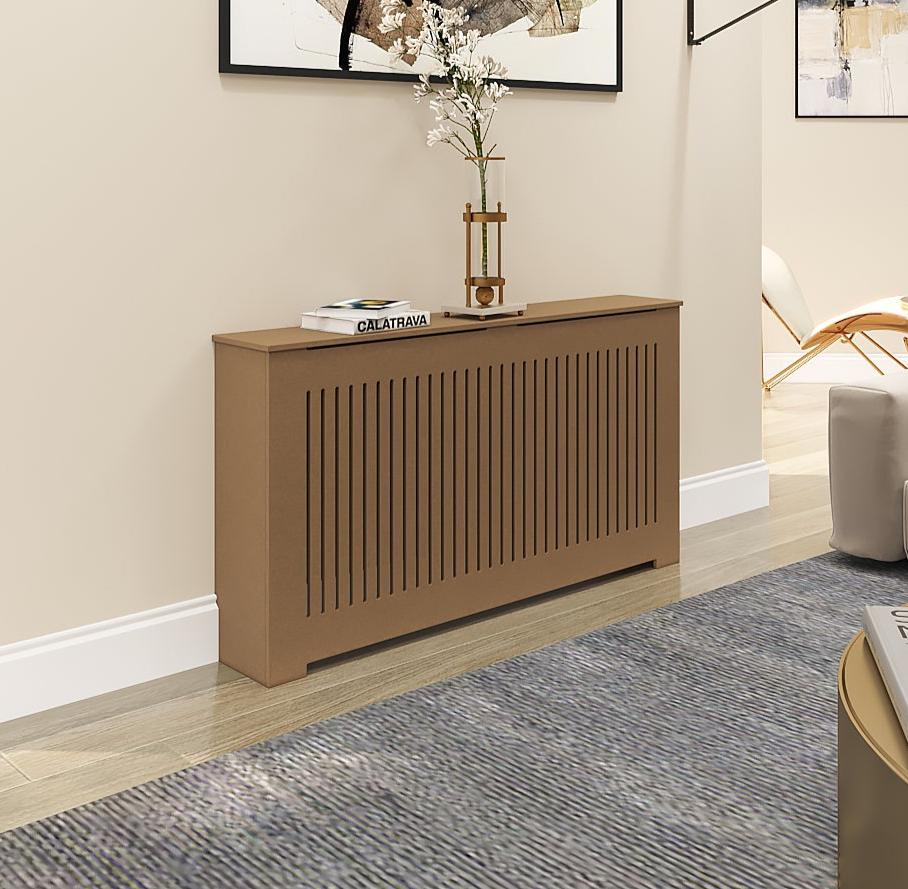
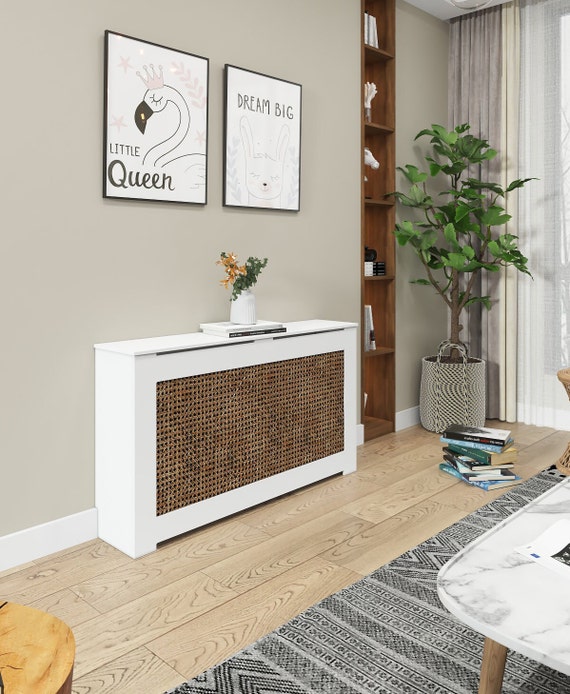
Not just can they childproof the appliance and include an aesthetically pleasing style, but a radiator cover can likewise include additional storage room, particularly in the washroom. With a flat surface area, you need to be able to save soaps and fragrances to keep them within very easy reach. By repurposing the area, the radiator cover can come to be a makeshift mantelpiece.
That is certainly the situation with radiator covers and they can restrict the efficiency of your main heating unit. By interrupting the flow of cozy air and the all-natural convection, you can experience warmth loss special info and grab the thermostat when you actually should not have to. Properly, a radiator cover can cost you cash by excessively spending on home heating you are not enjoying.
A Biased View of Radiator Covers
These consist of bleeding the radiators, applying reflective support, and maintaining a void for the radiator. The majority of houses should be hemorrhaging their radiators at the very least when a year.
Radiators work by all-natural convection, as chilly air sinks to the bottom of the wall, it comes right into call with the radiator then warms up and climbs as the air comes to be less dense. The cozy air successfully heats up a room. If you were to place items next to the radiator, such as a couch, or surround one with a radiator cover, after that this would interfere with the all-natural convection and you would not be able to really feel the full advantages of the heating.
Radiator covers might be a great option if you have little ones running around and require a way of stopping them from shedding themselves on the warm surface area. While a cover needs to look excellent to hide a radiator, any kind of material that blocks a heating appliance will reduce its efficiency. To provide a full design, the radiator cover must review the shutoffs, as well as the heating unit and pipelines.
Excitement About Radiator Covers
Which my inquiry: just how do I deal with determining if my radiators should have covers? I have a pal who thinks the concern is basic: a cover traps the warmth, so eliminating the cover will permit the warm to better get in the space and will make the radiator more efficient.
Which my concern: how do I deal with determining if my radiators should have covers? I have a buddy that believes the issue is basic: a cover traps the warmth, so eliminating the cover will certainly enable the warmth to much better enter the space and will make the Look At This radiator a lot more efficient.
Which my question: just how do I deal with identifying if my radiators should have covers? I have a pal that believes the concern is easy: a cover catches the heat, so eliminating the cover will certainly allow the warmth to better go into the area and will make the radiator extra efficient.